New Here? Play Our 9 Games in This Order
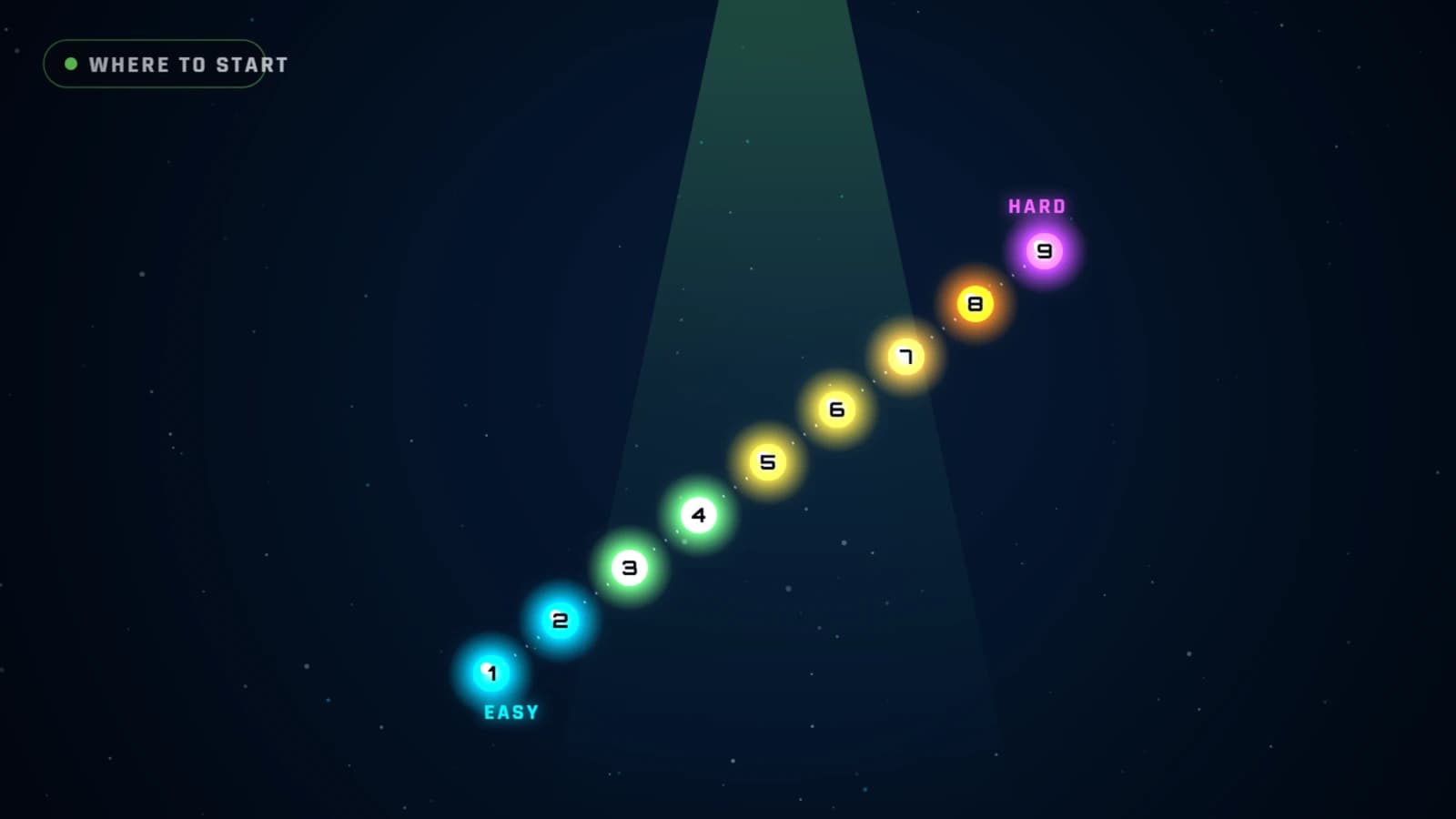
Nine games, and nothing on the site tells you which to open first. The grid sorts by newest and most-popular, which is fine for browsing and useless if you have never played any of them and want to start somewhere sane. So here is the running order we would give a friend who sat down at our page cold. It climbs from the game you can master in one sitting to the ones that will still be beating you next week, and it flags how long a run actually takes, because a two-minute game and a fifteen-minute one are different decisions.
We built all nine, so this is not a guess. The difficulty of each is written into its own code, and that is what the ladder below is sorted by.
Start here: one skill, one minute
Echo is the gentlest door in. It is Simon, and we have never pretended otherwise: four pads light a sequence, you tap it back, every round adds one more step. Nothing to aim, nothing to dodge. The only thing being tested is recall, and the pace stays forgiving for a long while. Playback opens near 600ms a step and only tightens 24ms a round, flooring out at 280ms around round 14. A round is over in well under a minute, and one wrong pad ends the run. If you have never touched anything on the site, press this first. It also happens to be tuned to a C major sixth chord, so a clean run plays back as a real little melody instead of noise.
Then Nova. Same idea of one honest skill, swapped from memory to reflex. Neon rings bloom onto the field, hold a beat, then shrink to nothing; pop each before it vanishes, and miss three to end the run. What keeps it fair while you learn is the hit radius, which never drops below 16 pixels, so a ring shrunk almost to a dot is still honestly poppable, and a whiffed tap into empty space costs your combo but never a life. Runs rarely outlast a loading bar. It is the other two-minute game we would hand a total stranger.
One input, now with greed
Once tapping in time feels natural, step up to the two one-button games that hide a scoring layer under a plain surface.
Flux is our one-button flyer. Tap to pulse up, gravity drags you back at 0.42 a frame, and you thread a core through gaps that open at 210px and pinch 3px per gate down to a 132px floor. Surviving is easy to grasp. The thing worth learning is the perfect thread: clear a gate within 20% of its centre and a streak builds, each clean pass paying more than the last, so hugging the line gets you far richer than flying wide and safe. We are honest about the catch in our own Flux strategy notes. There is no counter shouting when the streak lands, so plenty of players beat the game without ever noticing it had a skill layer at all.
Neon Stack is one tap and far crueller about it. A slab slides, you drop it, and any overhang gets sliced off, so a sloppy drop narrows the tower for good. The whole game lives in a 6-pixel window: land within it of dead-centre for a perfect that snaps the slab flush and hands up to 4px of width back. Miss and your combo falls to zero. Speed climbs from 3.4px a frame toward a hard cap of 8.5, and by then that 6px window is barely wider than a single frame, which is why our own tip is to release a hair before the slab looks centred. This is where "start" quietly turns into "practice." Our Neon Stack guide breaks the timing down.
Add space and a second thing to juggle
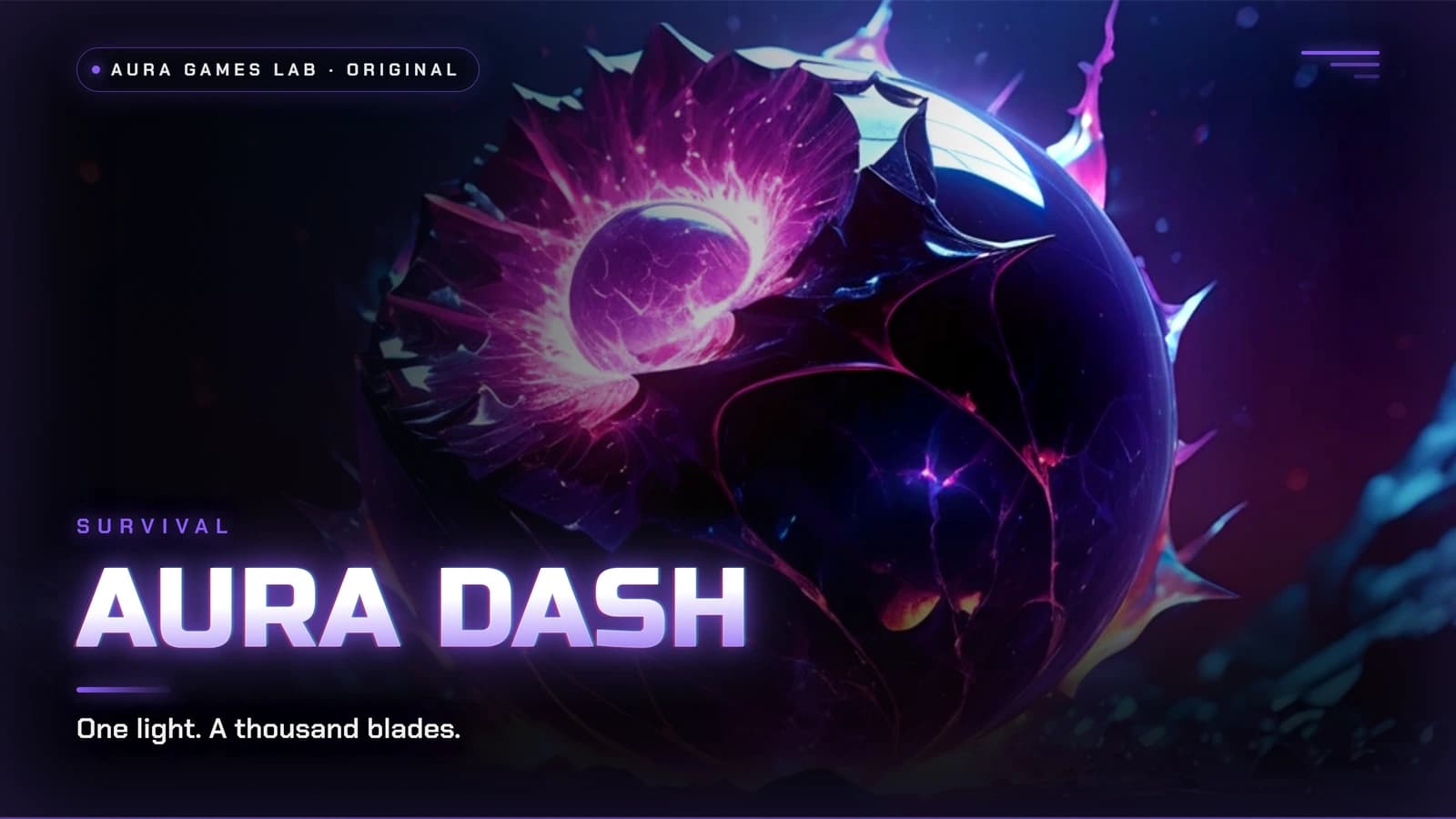
Aura Dash is the first game that asks you to steer and read position at the same time. One rule ends the run: touch a red shard. Everything past that is greed management. Your core trails the cursor on a soft lerp, cyan orbs feed a combo that bleeds off if you idle about two and a half seconds, and your only verb is a dash with just 13 invulnerable frames and roughly a second of cooldown. The mechanic worth chasing is the graze, which banks a bonus for sliding within 24px of a shard without touching it, and finally pries the safe line apart from the stylish one. It is floaty by design, so nearly all the skill sits in when you spend that dash. Our Aura Dash guide goes deeper on it.
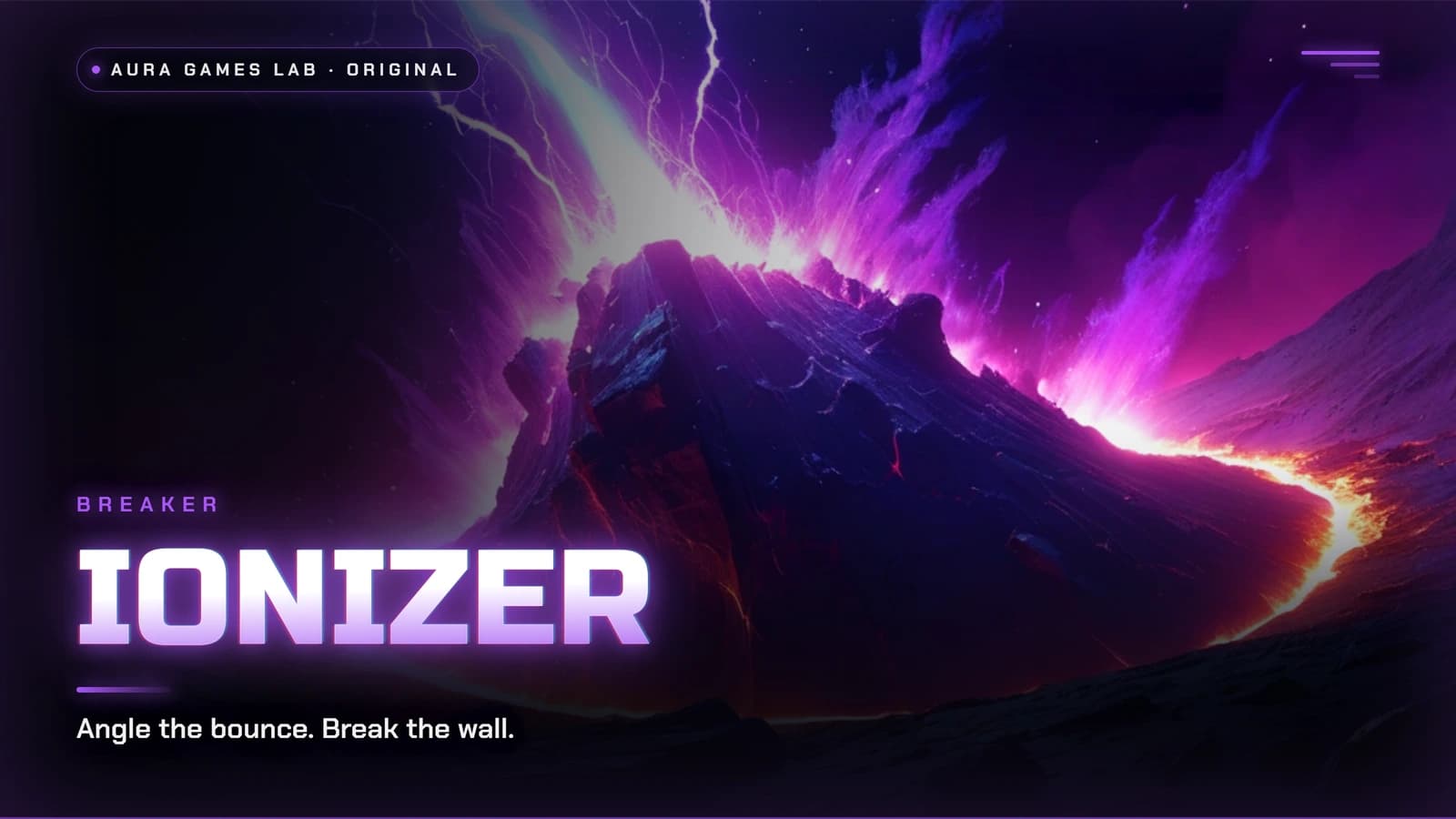
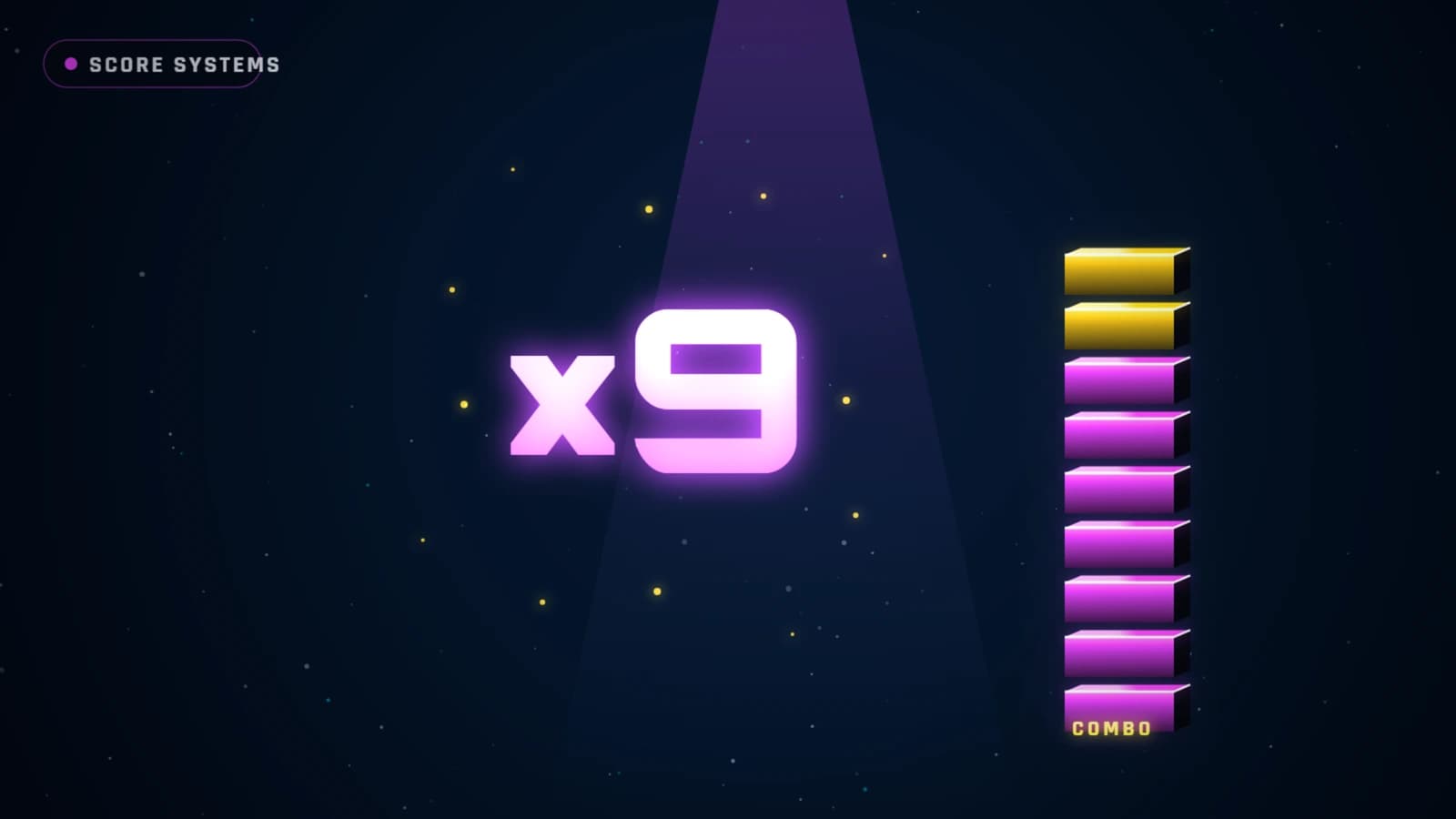
Ionizer graduates you to real analog control. You are not blocking the ball, you are aiming it: where it lands on the paddle sets its exit angle, with a little english off the paddle's own motion, clamped so the ion can never skim flat forever. The greed layer is a combo counting every block broken since the ball last kissed the paddle, climbing to a cap of eight and turning a 10-point brick into 80. The honest catch is that you cannot really hold that combo on purpose, so the fat multipliers read as a reward you notice more than a lever you pull. Sessions run longer here. A wave is a small arc with a finish, and clearing one shoves the ball toward its 8.5 top speed for the next.
The deep end
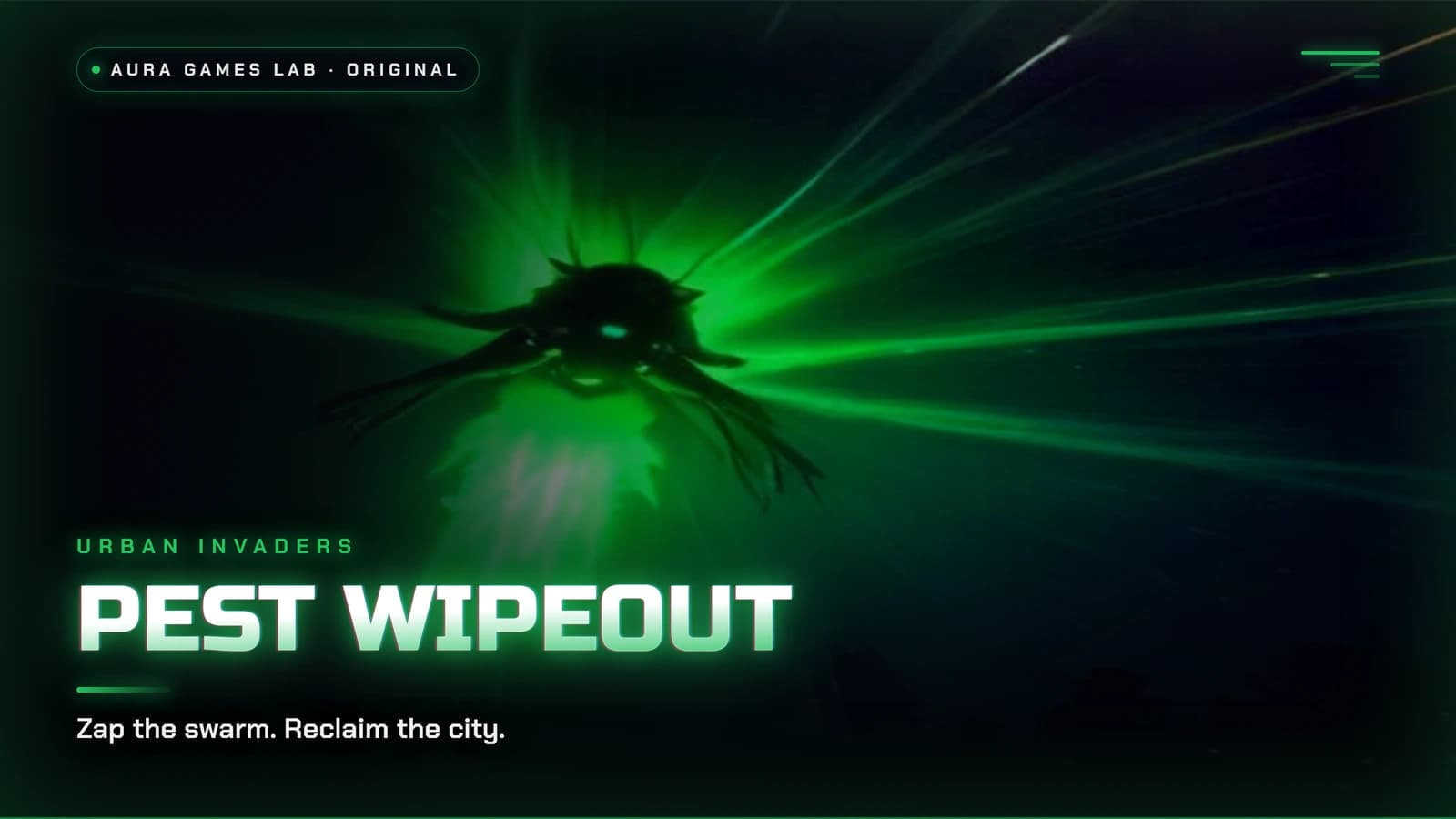
Pest Wipeout is the most game we have ever put on the site, and it sits last on the ladder for good reason. It is a formation shooter where you hold to fire, and each wave introduces one new pest before it starts mixing them, so you meet every threat cleanly. Mosquitoes that jitter in a zig-zag. Houseflies that loop. Roaches that soak three hits, wasps that spit stingers where you stand, crows that swoop in on wide black wings. Under all that sits the most to manage of anything we build: an eight-level weapon you lose two levels of on any hit, a combo that never caps but breaks the instant you are tagged, a bug-shield, a choose-an-upgrade card every few waves, and a multi-phase boss every fifth wave that loops back tougher. It is tough but fair now that every dive draws its path and every shot flashes a warning first, though a bad late wave can still bury a strong run in about four seconds. Come here once the reflexes from the games above are automatic. Our Pest Wipeout strategy covers the boss fights.
When you want people, not a high score
Two of the nine sit slightly apart, and it is worth knowing why before you open them. Both are older, both live on their own domain, and both change the assignment from beating your own score to outlasting something that is not a tuned curve.
CellSnake is our slither-class arena, framed in from its own site with its own leaderboard. One symmetric rule runs it: your head into another snake's body ends you, and their head into your body ends them just as fast, so a tiny snake can drop a giant on positioning alone. First run to first neon death takes about eight seconds. There is no gentle onboarding slope, because the difficulty here is other people. Read up on the common mistakes before you pick a fight.
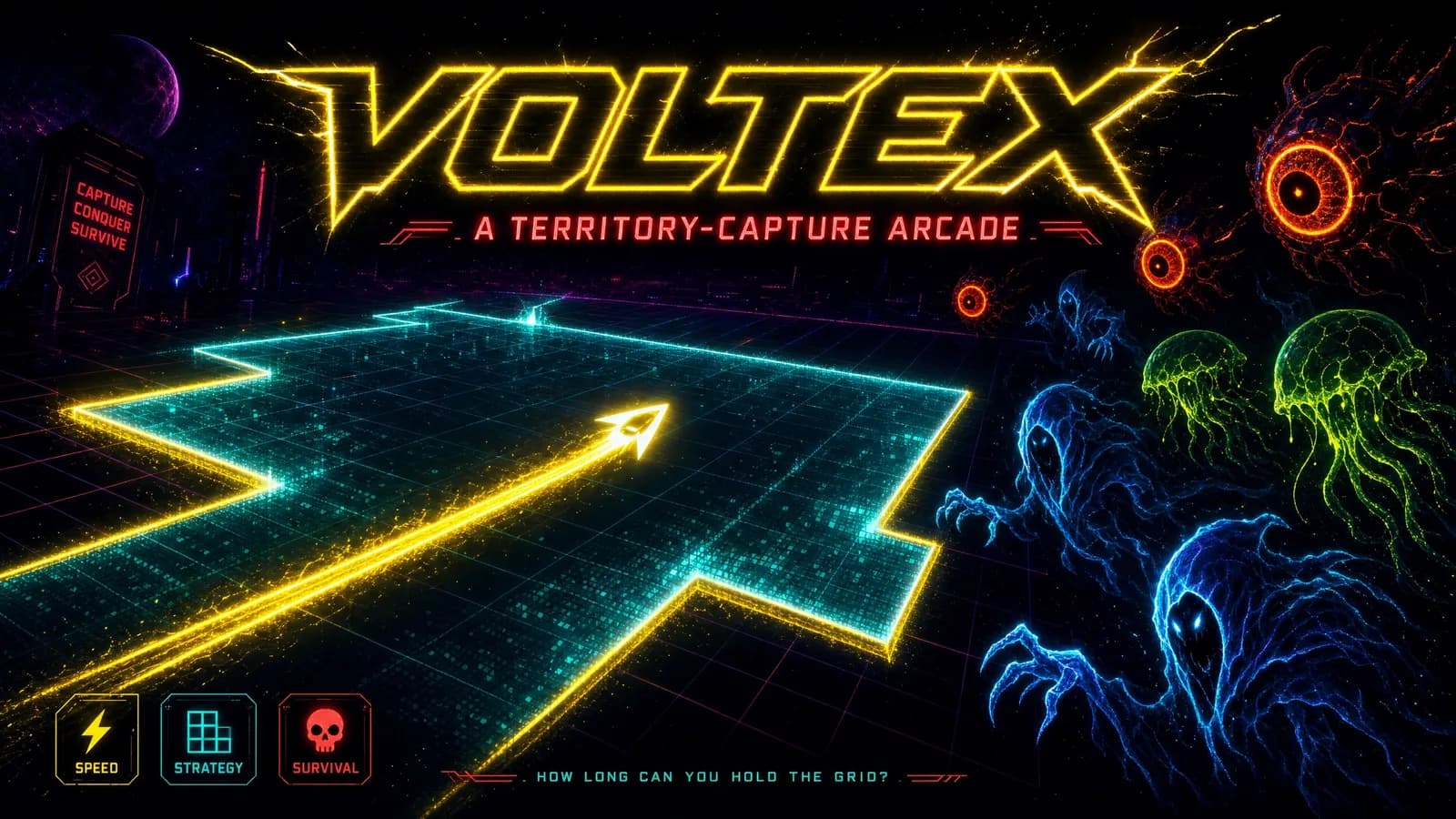
Voltex is territory capture across 15 levels, each anchored to a different monster, so the difficulty comes from reading behaviour rather than just faster enemies. It shipped before we settled our feel standard, and it opens in its own tab, because its host blocks embedding: the one scrap of friction we cannot scrub off this one. If you like the loop of carving a trail out and sealing the ground behind it, it carries the most structured ladder of anything we make.
The short version
New here and want a single pick? Open Echo or Nova, lose a couple of fast runs, and let the difficulty climb from there. Everything is free, runs the moment the page loads, and keeps your scores on your own device without asking who you are. The whole shelf is here when you would rather skip the ladder and just browse.
Frequently asked questions
Which of your games should a complete beginner play first?+
Echo. It is our simplest game, a four-pad memory test where you watch a sequence and tap it back. Nothing to aim, nothing to dodge, rounds finish in under a minute, and one wrong pad ends the run cleanly. Nova is the next easiest, swapping memory for pure reflex.
How long does a typical run take?+
It depends on the game. Echo and Nova finish in one to two minutes. Flux and Neon Stack run a little longer. Ionizer and Pest Wipeout stretch into real sessions, because clearing waves is an arc with a start and a finish rather than a single twitch.
Which game is the hardest?+
For raw depth, Pest Wipeout: an eight-level weapon you can lose two levels of on any hit, a combo that breaks the instant you are tagged, and a multi-phase boss every fifth wave. CellSnake is hard in a different way, because its difficulty is other real players rather than a tuned curve.
Do I have to play them in this order?+
No. The ladder just saves a newcomer from opening our deepest game first and bouncing off it. If you already play arcade games, skip straight to Aura Dash or Pest Wipeout. Everything is free and loads in a tab, so it costs nothing to jump around.