What Is 'Game Juice'? The Small Touches That Make a Game Feel Alive
Play any two browser games back to back and one will feel dead. Same idea, maybe the same core loop, but pressing the button does nothing to you. The other one grabs. Every tap kicks back a little, the screen answers, and you take one more go without deciding to. The difference usually has nothing to do with the rules. What separates them is the feedback layer sitting on top, and the industry nickname for that layer is juice.
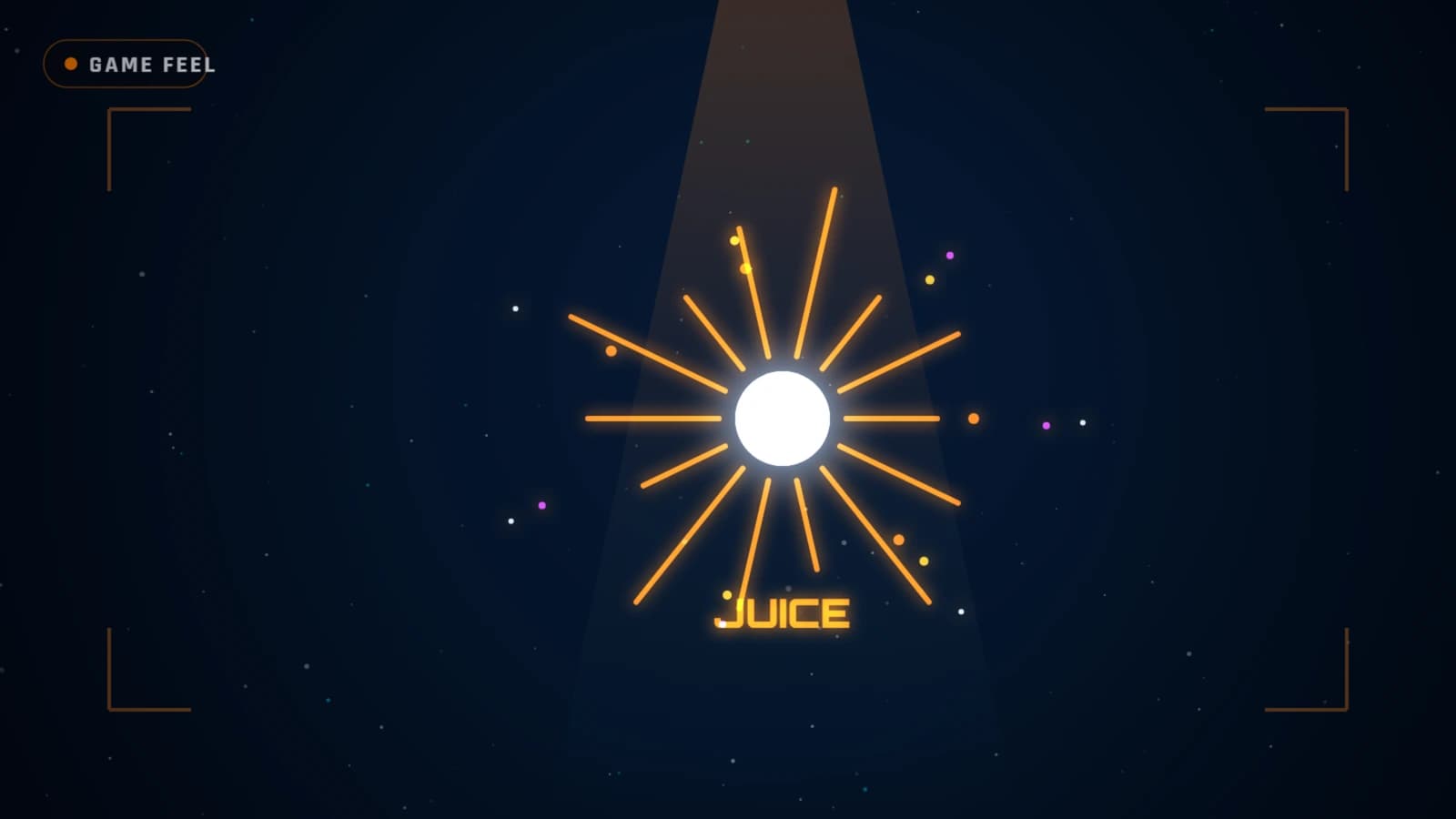
Juice is everything a game does in response to your input that doesn't change what's legal in the game. Bloom, screen shake, a freeze frame, a burst of particles, a punch of the camera, sound. Turn all of it off and the game plays byte-for-byte the same. It just feels like a spreadsheet. We rebuilt this layer across our whole library, and most of it lives in one file, gamefx.ts, plus a handful of tuned numbers each game owns. This is what actually lives in it.
Real neon comes from a blur pass, not a color
The glow in our games doesn't come from picking a bright cyan. It's a real bloom pass, computed every frame. Our Bloom class takes the finished frame, copies it into an offscreen canvas at a third of the resolution, runs a 4-pixel blur over that, and composites the result back on top with additive blending at 60% strength. On a near-black field (our base color is #05060c) only the genuinely bright pixels survive the shrink-and-blur, so only the neon bleeds. The dark background contributes nothing.
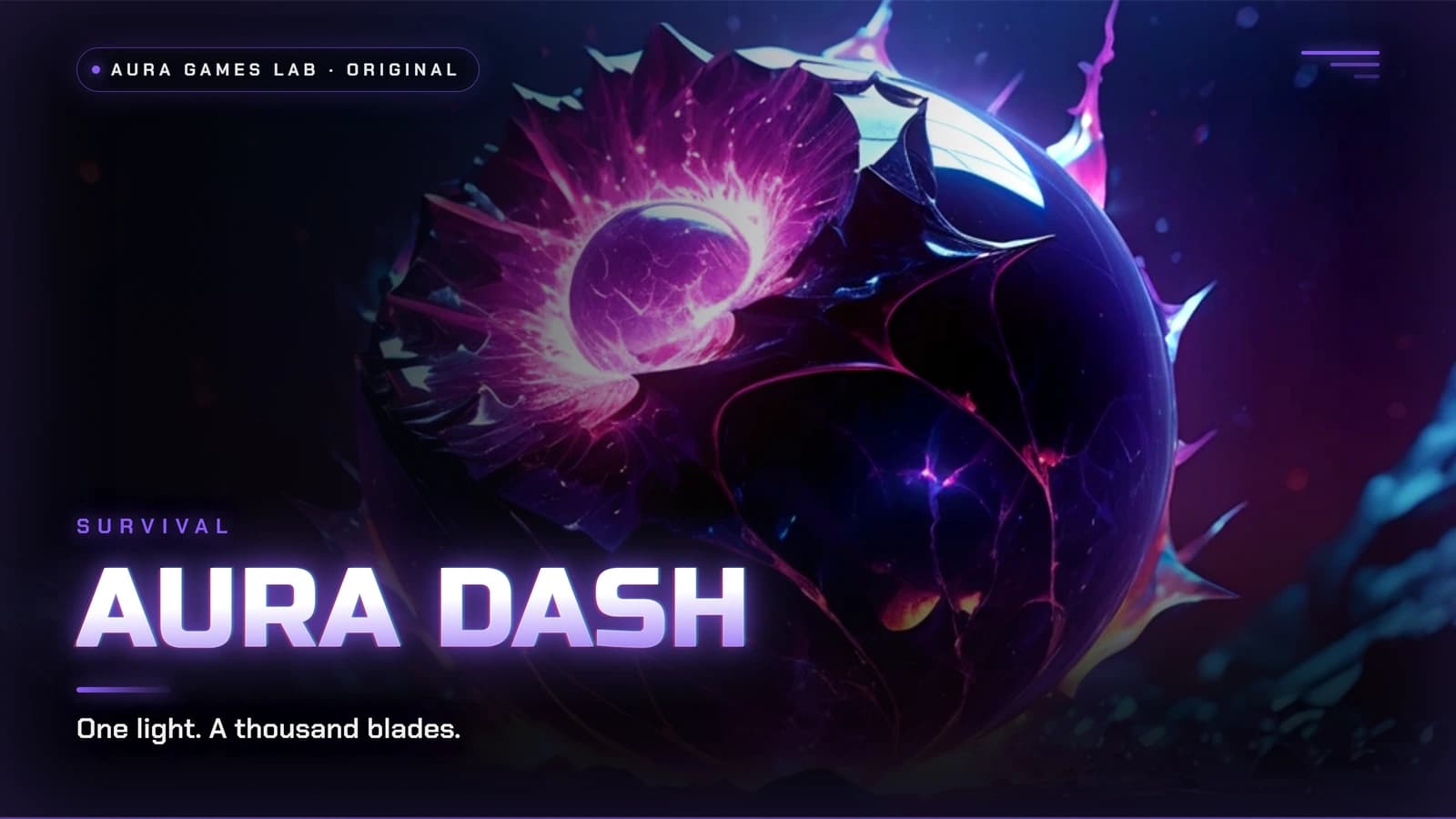
That's why a shard in Aura Dash looks like it's emitting light instead of being painted a light color. The bleed lands on its neighbours the way a real bright object bleeds into a camera lens. Doing it at a third resolution is the trick that keeps it cheap: one downscaled blur and one composite per frame, running in device pixels so it doesn't care about the game's zoom or the phone's pixel density.
Underneath all of it sits a living backdrop from the same file. A parallax starfield drifts over a slow additive nebula. A couple of distant glowing planets hang behind it, and a vignette pulls the edges down. Pure math, no images, pre-allocated once so the animation loop never touches the garbage collector. It gives every game depth behind the play instead of a flat grid. We wrote about that overhaul in the story of rebuilding how our games feel; this is the concept underneath it.
Screen shake and the freeze frame
Two effects do most of the heavy lifting, and neither is a graphic. They're motion.
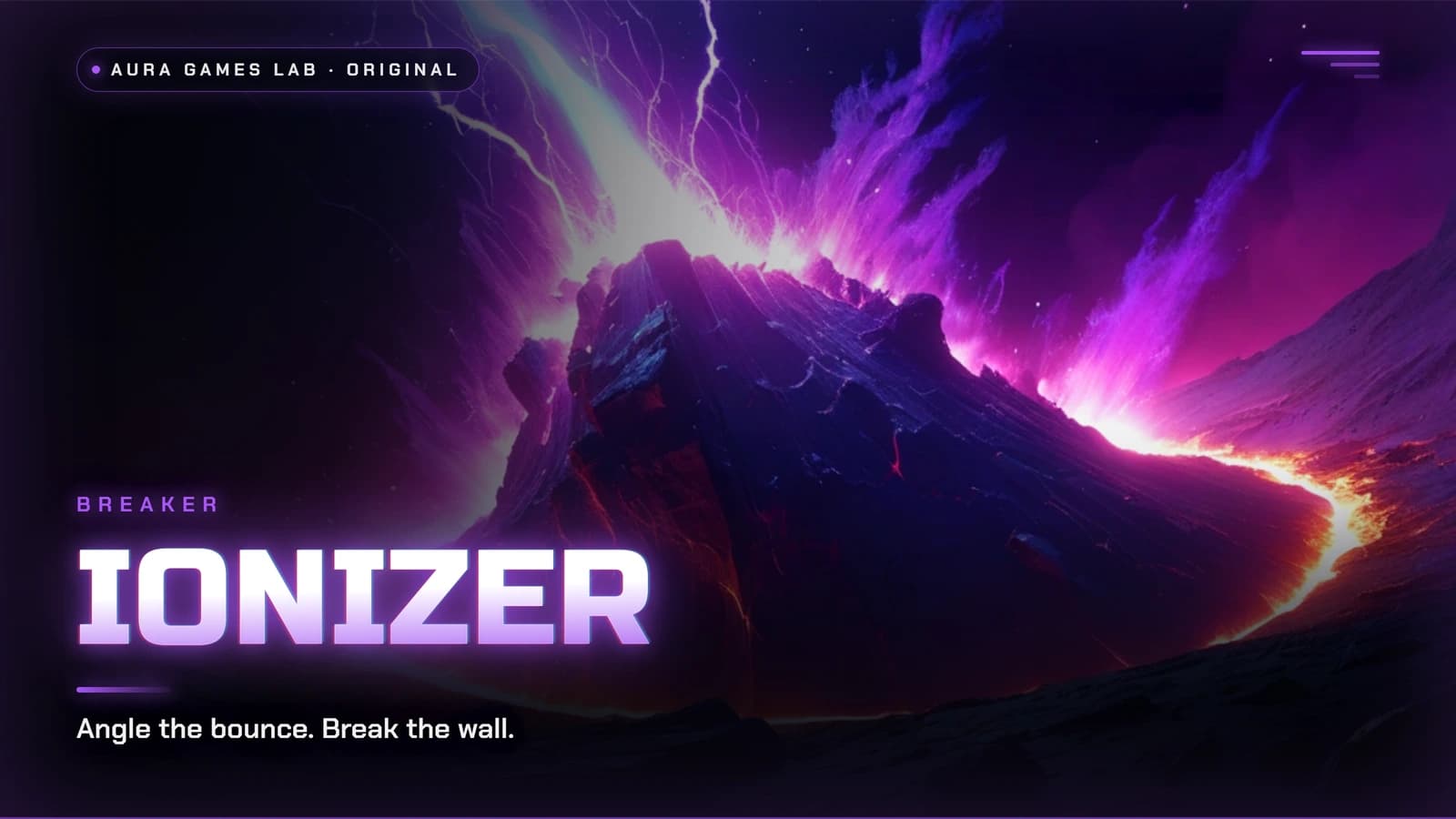
Screen shake is a decaying offset applied to the whole camera on a big moment. A hit, a break, a boss popping. It spikes and falls off over a few frames. The rule we learned the hard way: shake has to decay, and it has to scale with the event. In Ionizer the particle burst and the shake both scale with your current combo multiplier, so a break at an eight-chain rattles the screen and a cold break barely twitches it. Constant shake is nausea. Shake that tracks the size of what just happened is force.
Hit-stop is the sneakier one. It's a freeze of a few frames at the exact instant of impact, and your brain reads the pause as weight. Flux freezes for 7 frames when you crash into a gate. That fraction of a second lets the collision register as a real blow before the game-over card slides in. Fighting games have done this for decades on every heavy hit, because two things that collide in the real world briefly stop. Ionizer does it too, a short freeze when you lose the ball. Take the freeze out and the same crash feels like the game just gave up rather than hit a wall.
The camera punch, and the right particle count
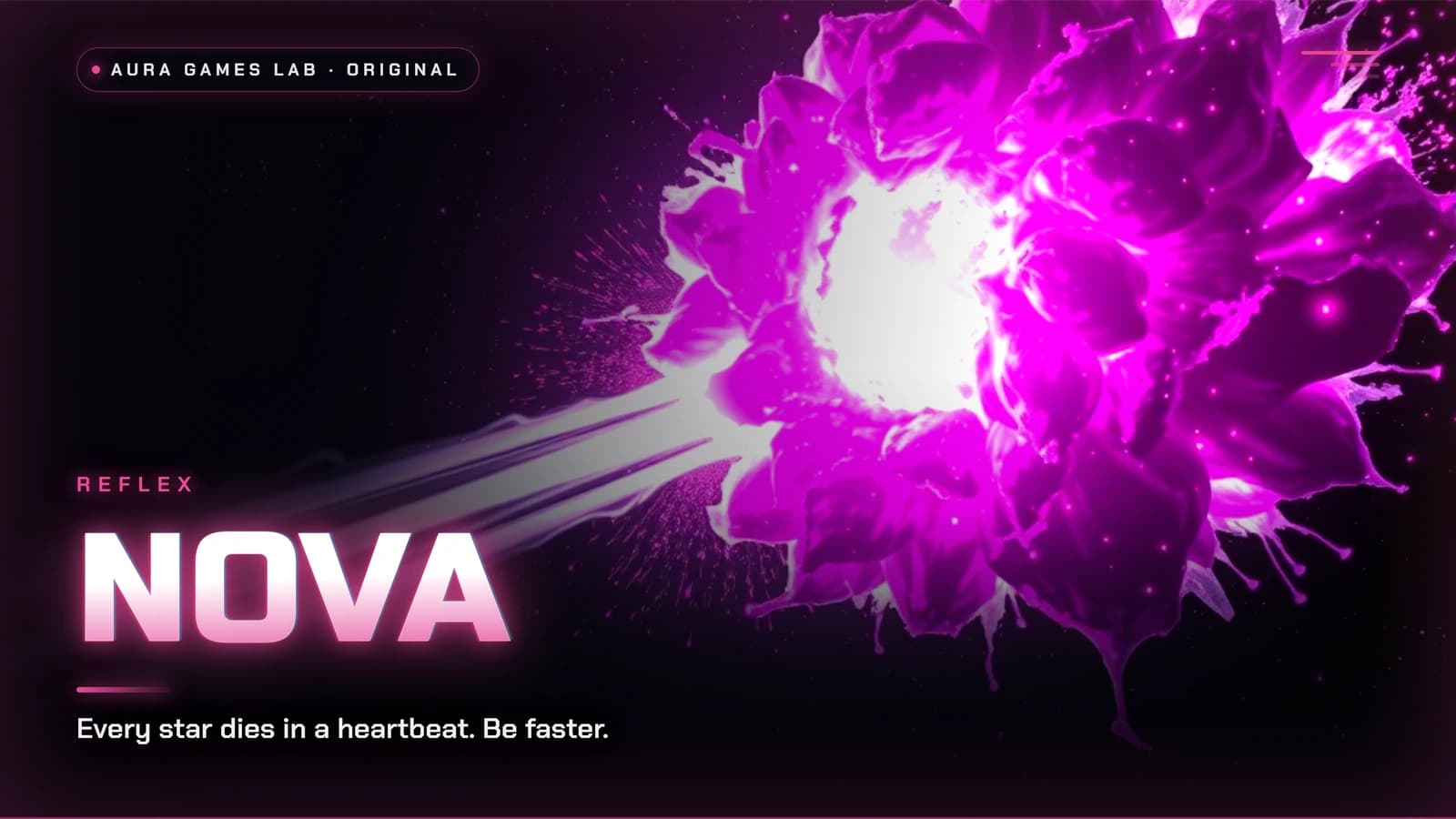
A zoom-punch is a quick scale of the whole view, in and back, on a good event. Nova does it on every ring you pop and Ionizer on every brick you break. It's tiny, maybe a few percent, and it's over in a few frames, but it makes a successful action feel like it had recoil.
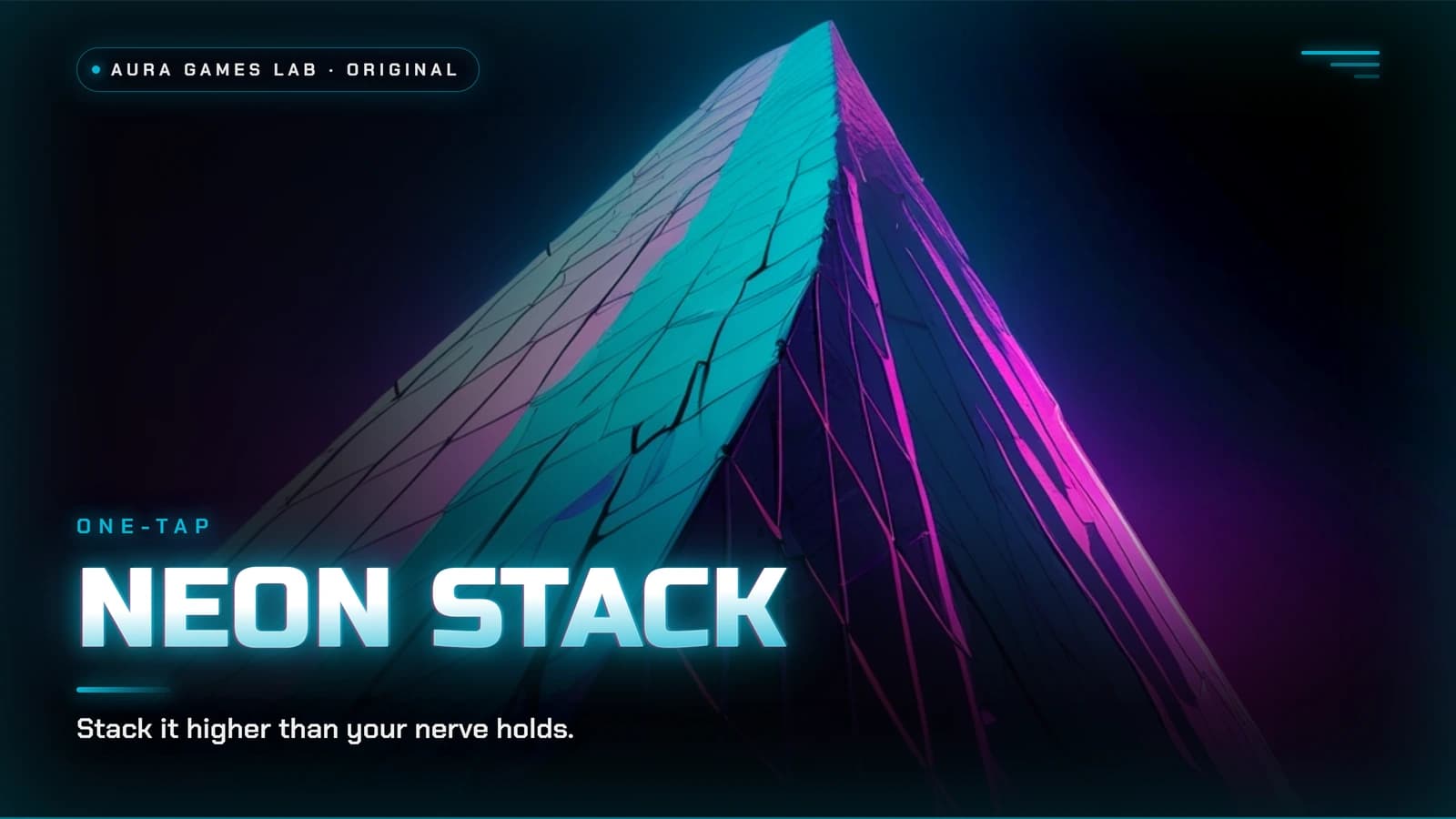
Particles are the confetti of juice, and the number matters more than you'd think. Flux throws a 26-particle burst on every impact. Not five, which reads as cheap, and not four hundred, which reads as soup. Enough to spray and settle. Squash-and-stretch is the oldest animation trick there is: a slab in Neon Stack squashes flat on landing and springs back, and Flux squashes on every single pulse. A rigid rectangle landing dead-straight looks like a bug. A little give looks alive.
None of these change a rule. A Flux gate you cleared stays cleared whether or not the screen squashed on the way through. Every effect in the file obeys that line.
OVERDRIVE: the peak that pays off a streak
The best piece of juice we build is one you have to earn. Most of our games track a combo, and at the top of it the feedback doesn't just get a bit stronger, it changes gear. We call it OVERDRIVE.
In Aura Dash, hitting an x9 combo trips it: the field over-blooms for about ten seconds, orbs magnetise into your core, and your grab radius jumps 34 pixels. Nova lights the entire screen at x9. Neon Stack tips into an overdrive glow once your combo passes 5, Ionizer at a six-chain. The point is that the juice becomes a reward you're chasing, not wallpaper. A hot streak looks like a hot streak. We dug into the scoring behind these in how combos work in our games, but the feel is the half you notice first: the screen tells you you're cooking before the number does.
Sound is juice too
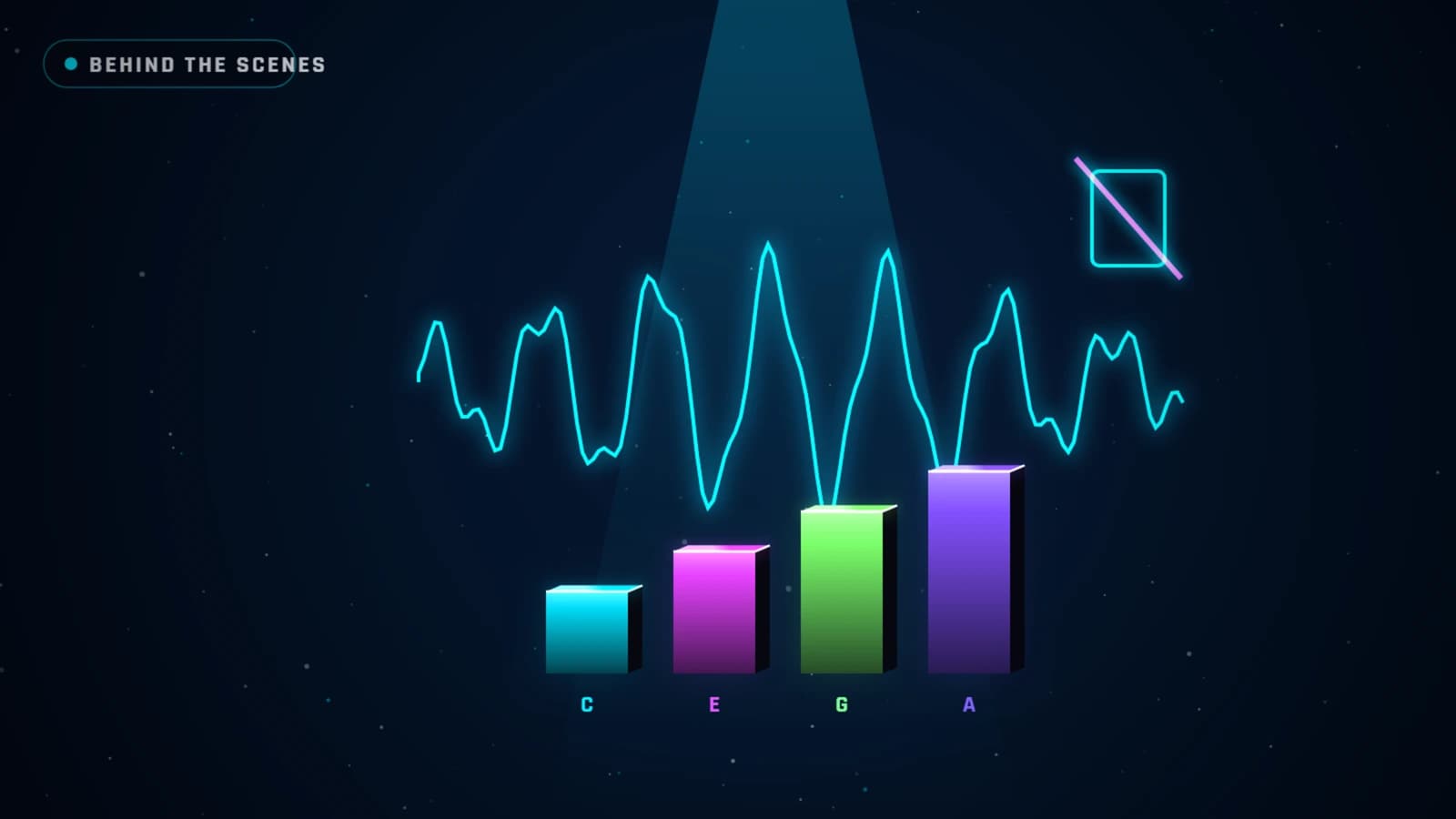
We built the whole audio engine as synthesis, no files, generated live with the Web Audio API. It's the same idea as the visual layer, applied to your ears. A pickup's pitch climbs with your combo: the tone starts at 360Hz and glides up, rising another 55Hz per combo step up to nine. A "perfect" is two clean sine notes stacked. A game-over is three sawtooth tones falling, 420 down to 220, with a noise burst under it. Each sound has a 6-millisecond attack so it hits sharp instead of fading in. The master volume sits low, at 0.32, so it accents rather than nags.
Pitch that rises with your streak is doing the same job as the overdrive bloom. It's telling you, without a word, that this run is going well.
Why the tiny layer decides everything
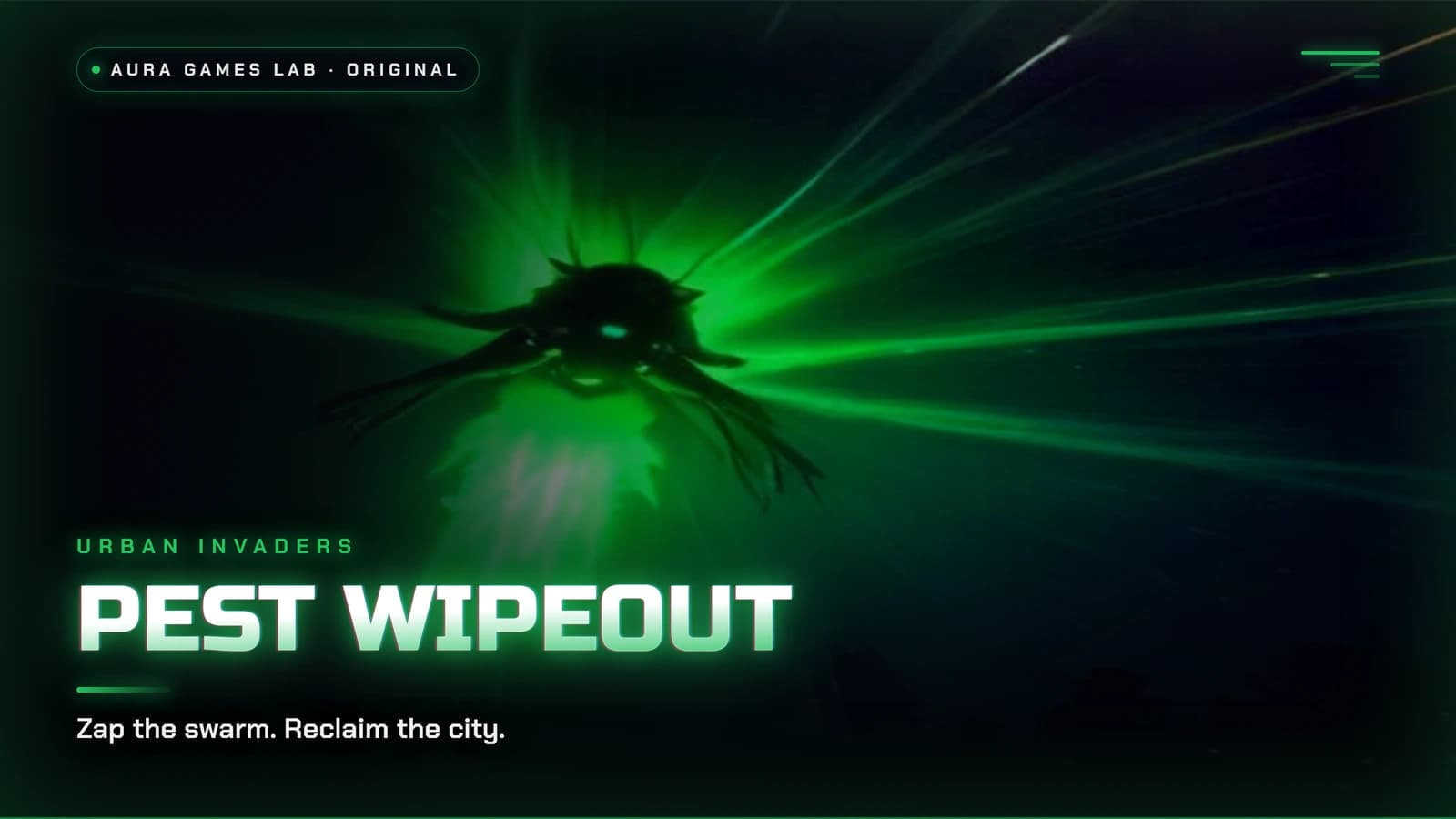
A browser game has about ten seconds before the finger on the close button wins. Nothing about your core loop lands in ten seconds. The juice does. It's the reason Pest Wipeout with its splatters, shake and overdrive bloom holds a first-timer who'd have bounced off the same shooter drawn flat.
Juice can't save a bad game, and it can't manufacture depth that isn't there. What it can do is make a good small game feel worth your attention right now, in the first few taps, before you've learned anything. That's not decoration. On the web, that's survival. If you want the design side of building loops this small, we wrote that up in one-tap game design. Otherwise, open Aura Dash, push to x9, and watch the whole screen agree with you.
Frequently asked questions
What is game juice?+
Juice is the industry nickname for the feedback layer of a game: the shake, flash, particles, sound and screen-punch that fire in response to your actions without changing the rules. A juicy game rewards every tap with a small physical response, so pressing a button feels good on its own. Strip the juice out and the game still plays identically, it just feels dead.
Does game juice make a game better or is it just decoration?+
Both. Juice does not add depth, but it makes actions legible: a bright bloom and a shake tell you a hit landed faster than a number ever could. On the web, where a player's finger is already near the close button, that instant sense of weight is often what buys a game its second minute. We treat it as functional, not cosmetic.
What is hit-stop?+
Hit-stop is a tiny freeze at the moment of impact, usually a handful of frames. Flux freezes for 7 frames when you crash, which lands the blow before the game-over card appears. Fighting games use the same trick on every heavy hit. It reads as force because a real collision briefly stops both things moving.
Can I turn the effects off?+
Yes. Every game respects your device's reduced-motion setting, and when that's on our drifting backdrop goes still, the star twinkle settles, and the busier animation calms down. There's a mute button for sound on every game too. The juice is meant to serve the play, not fight anyone who wants it quiet.