Ionizer: Brick-Breaker Tips from the People Who Built It
Ionizer is our neon take on the oldest arcade idea there is: bounce a ball, break the wall. We built it, so here's how to actually control the chaos — and where the real points hide.
The paddle is a steering wheel, not a wall
The single thing that separates flailing from playing: the paddle sets the ball's angle. Where the ball touches it decides where it leaves. Centre sends the ball nearly straight up. The nearer the edge you catch it, the sharper the sideways angle.
There's a second control that most players never notice, and it's subtler: english. If the paddle is moving at the moment of contact, that motion bends the bounce. Slide the paddle left as you hit and the ball leans left, on top of whatever the contact point already did. Good players don't catch the ball with a still paddle. They swipe through it, steering the bounce toward the next cluster. Once you feel this, aiming stops being a guess.
The combo multiplier is where the score lives
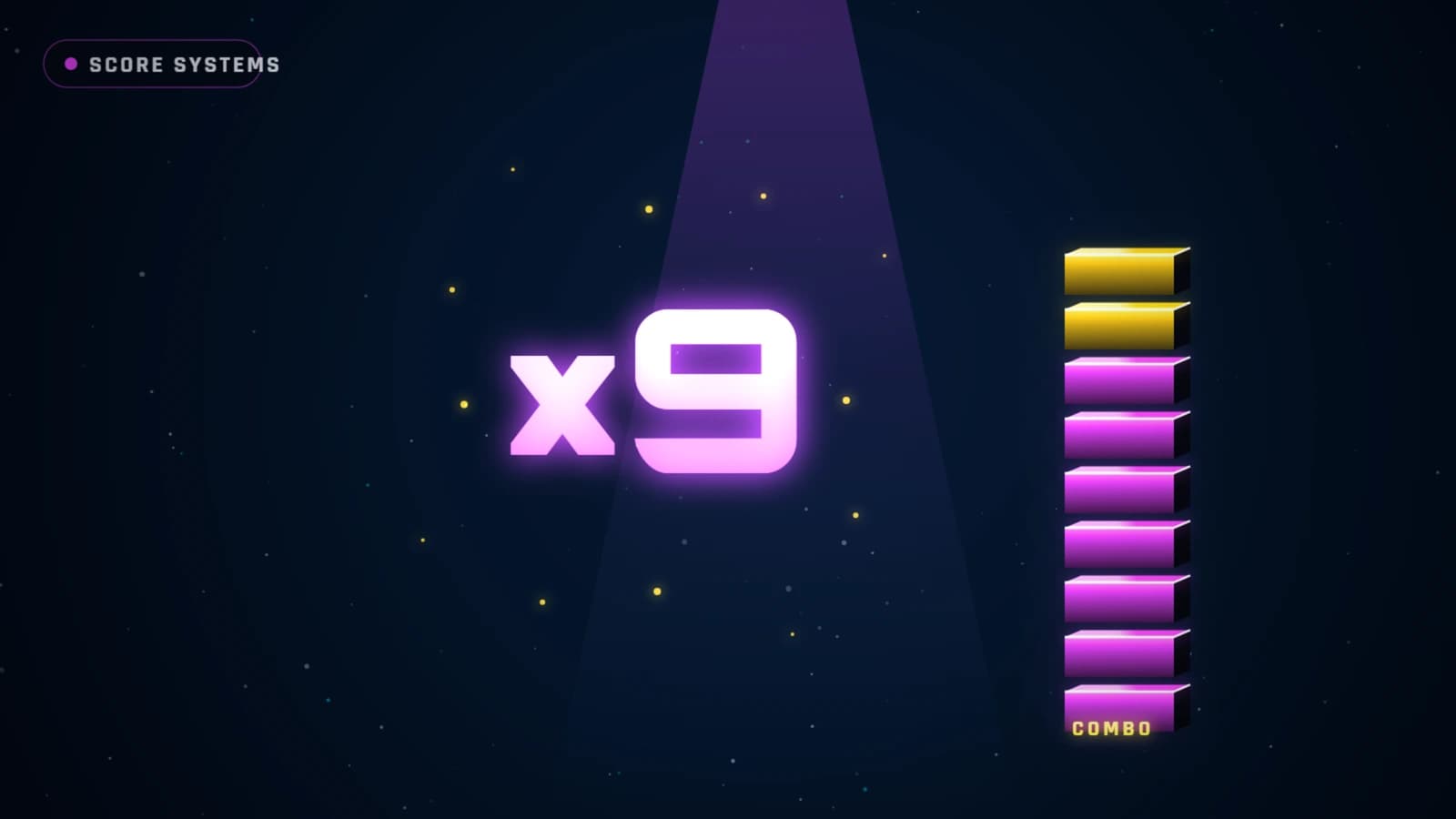
This is the mechanic that turns Ionizer from a casual bounce into a scoring game: every brick you break without the ball coming back to your paddle raises a multiplier, climbing to x8. A brick worth 10 becomes worth 80 in a hot chain.
And the knife-edge: the moment the ball touches your paddle, the combo resets to zero.
So the whole game re-frames around one tension. How long can you keep the ball airborne among the bricks? Every trip back to the paddle is a reset. The greedy, high-score line is to angle your bounces so the ball stays up top, ricocheting brick-to-brick, building the multiplier, and only dropping back to you when you absolutely must catch it. Catch too early and you throw away the streak. Get greedy and you lose the ball entirely. You make that call over and over, and that is Ionizer.
Charged bricks: the difficulty curve
From level two, charged bricks appear. You'll know them by the bright rim, and they visibly darken as you chip them. They take two or three hits, and (this part matters for your combo) only the destroying hit counts. A chip just bounces the ball and dims the brick.
That changes your routing. A wall of charged bricks won't fall to a single clean pass, so plan to work the same cluster more than once, and don't expect your multiplier to rocket the way it does through a wall of fragile blocks. Later levels mix fragile and charged, so read the rims and spend your best angles on the blocks that will actually break.
Digging blocks out of the corners
The last few blocks are almost always jammed in the corners where a vertical ball never reaches. The fix is intentional edge hits (or a well-timed swipe of english): catch the ball at the tip of the paddle so it screams out at a shallow, sideways angle, and walk it into the corner column. Keep bouncing dead-centre with two corner blocks left and you'll be there forever. Change the angle on purpose.
Keep the angle useful
A ball travelling almost straight up-and-down is inefficient. It spends ages crossing an emptying field. When you're down to scattered blocks, feed it a shallower angle so it sweeps sideways across the rows and clears more per pass. Save near-vertical bounces for when the wall is dense and any angle finds a brick.
Beat the speed-up
Each full clear advances a level, quickens the ball, and adds more charged bricks. The next ball after a life loss or a wave clear auto-launches, so keep your paddle ready. There's no pause to reset your hands. Two habits carry you:
- Bank the easy blocks early, while the ball is slow and every bounce is a gift.
- Watch the ball, not the blocks. As it speeds up, get the paddle moving toward where the ball will be, not where it is.
The short version
- Aim with the paddle: contact point and english (swipe through the ball).
- Chase the airborne combo: every brick without a paddle touch is worth more, and a paddle touch resets it.
- Read the rims: charged bricks need multiple hits and only pay out on the kill.
- Edge hits for corners, shallow angles to sweep a thinning field.
- Anticipate the speed-up; the next ball launches itself.
It's a fifty-year-old idea with a modern greed mechanic bolted on, and still one of the purest tests of touch in games. Play Ionizer and see how many waves, and how big a chain, you can hold.
Frequently asked questions
How do I aim the ball in Ionizer?+
Two ways. First, where the ball lands on the paddle sets its bounce angle. Dead-centre goes straight up, near an edge fires out sharply. Second, the paddle imparts english: if you're sliding the paddle as the ball hits, that motion bends the bounce in the direction you're moving. So you aim with both contact point and paddle movement.
What is the combo multiplier and how do I keep it?+
Every brick you break without the ball returning to your paddle raises your multiplier (up to x8). The catch: the instant the ball touches the paddle, the combo resets to zero. So the big scores come from long airborne chains, keeping the ball up among the bricks, ricocheting from one to the next, for as long as you dare before you have to catch it.
Why do some bricks take more than one hit?+
From level two onward, tougher 'charged' bricks appear. You'll spot them by the bright rim, and they darken as you chip them. They take two or three hits and only count toward your combo and score on the hit that finally destroys them. They're the game's difficulty curve.
Does it get faster?+
Yes. Clearing the whole field advances a level and speeds the ball up (and adds more charged bricks). After a life or a cleared wave the next ball auto-launches, so there's no dead moment. Bank the easy blocks while it's slow.