How We Build Our Browser Games: A Look Inside Aura Games Lab
Most of the games we build get closed in under thirty seconds. That's not a failure. It's the venue. A browser tab is the most impatient stage in games. Nobody installed anything, nobody paid, nobody made a commitment. They clicked a link, and they will click away just as fast the second they're bored. Everything we do at Aura Games Lab is shaped by that one unforgiving fact.
So instead of another "top 10 browser games" list, here's the honest version of how we actually make the things we make, why they look the way they do, and the design rules we argue about internally. This is the stuff only the people building it would know.
The tab is a brutal place to ship a game
When you buy a game on a console or download one from a store, the developer has already won a small battle: you committed. You waited for a 40GB download. You're invested before the title screen loads. We get none of that.
Our players arrive cold. That gives us three hard constraints, and we treat them as non-negotiable:
- It has to load almost instantly. Our internal rule is that the core loop should be playable within a couple of seconds on a mid-range phone over normal cellular data. If it isn't, we're already losing people to the loading bar.
- It has to run on a modest phone. Not the latest flagship — a three-year-old Android with a browser and eleven other tabs open. If it stutters there, it doesn't ship.
- It has to be fun before anyone decides to stay. There is no tutorial long enough to survive a player who isn't already enjoying themselves.
Those constraints aren't limitations we tolerate. They're the design brief. A game that respects them feels effortless, and "effortless" is the entire product.
We build the game before we build the game
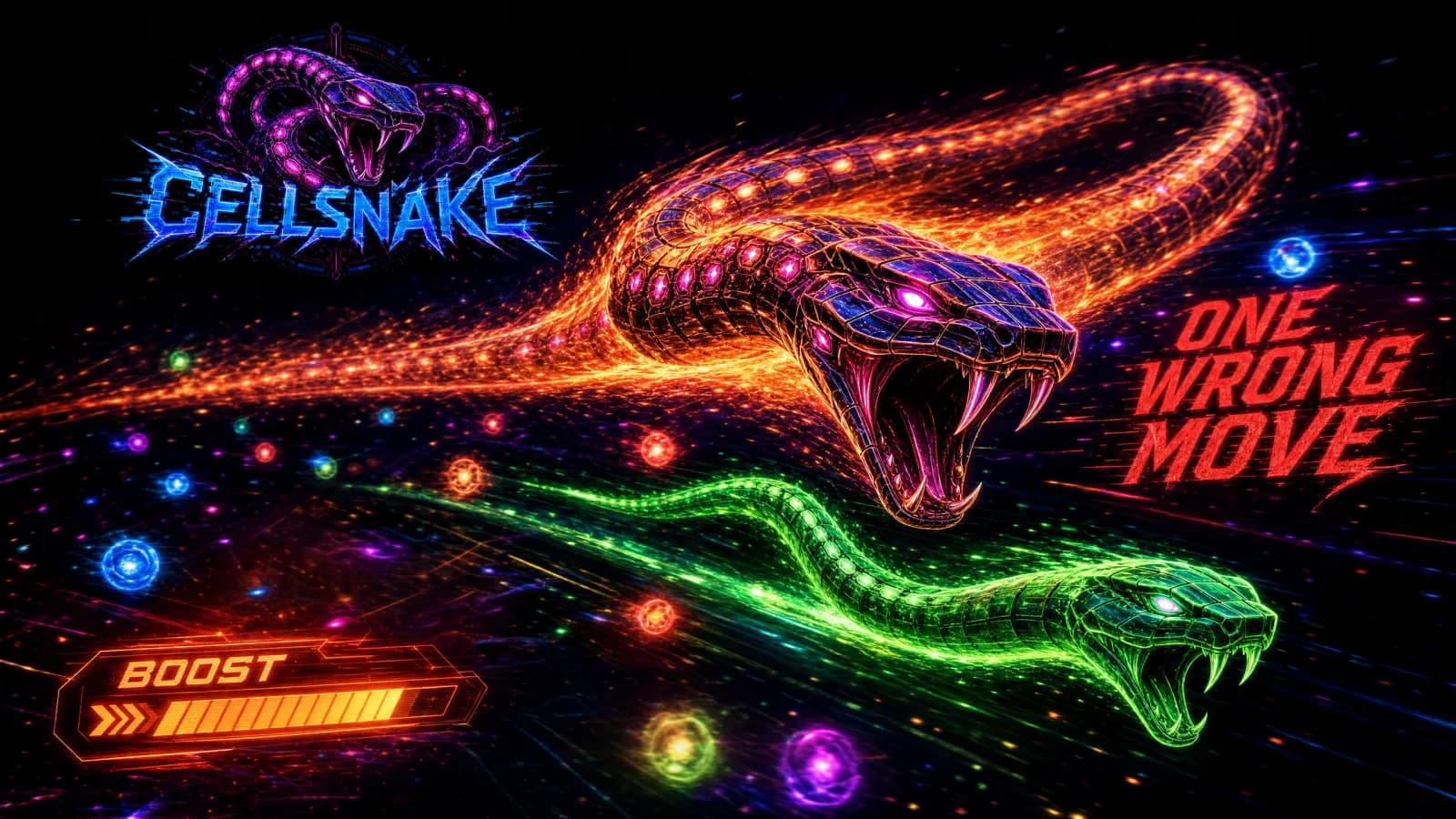
Every one of our originals starts life as an ugly grey box. No neon, no particles, no sound. Just a shape you can move and a rule that pushes back. Aura Dash began as a white dot dodging grey squares. CellSnake was a line that got longer when it touched a pixel.
We do this because art lies. A gorgeous prototype can trick you into thinking a boring mechanic is fun. You're admiring the paint job, not the driving. Strip all of it away and the truth comes out fast. If a grey box is fun, we've got a game. If we catch ourselves adding "just one more feature" to make it interesting, the core is dead and we start over.
Our test for fun is embarrassingly simple: we play the grey box for ten minutes, and we watch whether we want an eleventh. Nobody's told to keep playing. If a hand keeps reaching for the mouse on its own, that's the signal. Everything after that (the glow, the screen shake, the sound of an orb popping) is amplification. It makes a fun thing more fun. It can never make a boring thing fun.
What separates a 30-second game from an hour-long one
The difference is almost never graphics. It's the shape of the loop and the cost of failing.
The games people keep open share one trait: death is cheap and the next run is instant. When you crash in Aura Dash, there's no menu, no "continue?" dialog, no ad. You're one tap from spawning again, and the run that just ended is still fresh enough that you know exactly what you'd do differently. That "I can beat that" itch is the whole engine of a session. The moment we put friction between dying and retrying, sessions collapse.
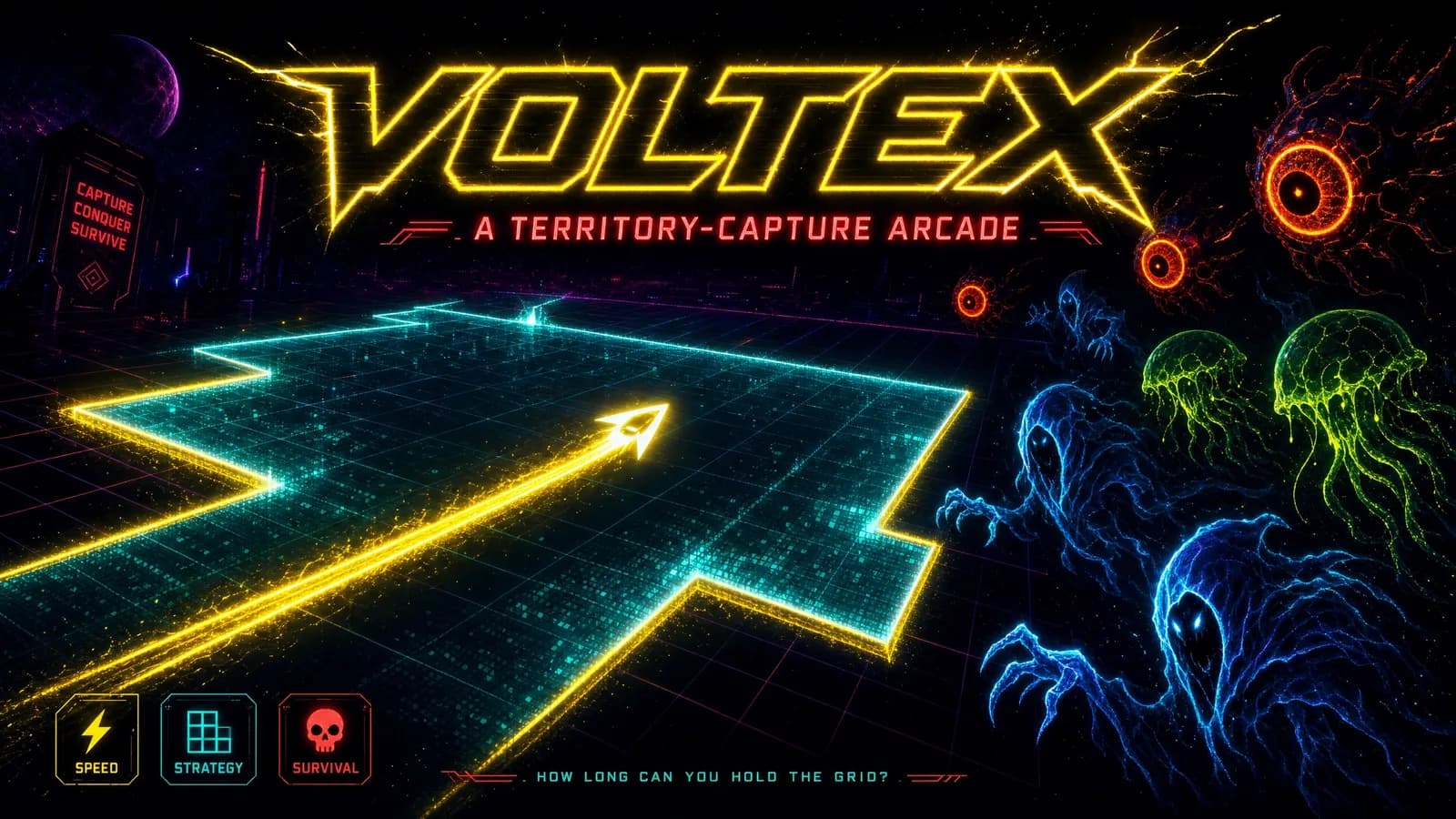
The second trait is a skill ceiling you can see from the floor. In CellSnake, cutting off a bigger snake looks impossible on your first run and obvious by your twentieth, but you can see better players doing it the whole time. In Voltex, you lose a level to a monster and immediately understand the pattern you missed. The game is always dangling the next rung of the ladder just above your reach. A game you close in thirty seconds usually showed you everything it had in those thirty seconds. A game you keep open kept a little back.
Why our games are raw canvas, not a framework
One technical decision here is pure browser-game pragmatism. Aura Dash renders on a plain HTML <canvas> driven by a requestAnimationFrame loop, and every piece of moving game state (the player, the shards, the particles) lives in mutable refs, deliberately kept out of the app's normal render cycle so the game loop never triggers a single UI re-render.
That sounds like an implementation detail. It's actually a design choice about respect. A dropped frame in a dodging game isn't cosmetic — it's the frame where you hit the shard you would have cleared. Keeping the loop lean is how we protect the feel on a weak phone. We store your high score in the browser itself so there's no account wall, and we honor the system's reduced-motion setting so the game dials back its shake and particles for anyone who needs that. None of this is glamorous. All of it is the difference between a game that feels good and one that feels cheap.
The phone is not a small desktop
We design controls for a thumb first, then adapt to a mouse, never the other way around. A thumb is imprecise, it covers part of the screen, and it's attached to a hand that's also holding the device. So our originals steer by pointing at where you want to go, not by pressing directional buttons. You drag, the core follows. It works identically whether it's a finger or a cursor, which is why the same build plays right on both without a separate mobile version.
We also refuse to hide the game behind orientation prompts or "rotate your device" walls. If a person is holding their phone in portrait, that's the game's problem to solve, not theirs.
What we leave out on purpose
The hardest part of making a good browser game is deciding what not to build. Our permanent cut list:
- No forced tutorials. If the first thirty seconds of play don't teach the game, the design is broken. Fix the design, don't add a manual.
- No account before you play. Nobody signs up for a stranger. Earn the session first.
- No loading screen we can avoid. A progress bar is an apology for something we should have prevented.
We break these rules sometimes, and we usually regret it.
Play the results
The philosophy only matters if the games are good, so judge them yourself. Aura Dash is the purest expression of everything above. It runs right on the page, no download, no iframe. CellSnake is our take on the slither arena, built around a single skill you can chase for months. And Voltex is fifteen levels of neon territory-grabbing with fifteen monsters trying to stop you.
If you want the full tour of the studio and everything we've built, start with our welcome guide. Otherwise, open a tab and see if you close it in thirty seconds.
Frequently asked questions
What makes building a browser game harder than a downloadable one?+
There's no install step to earn a player's patience. The game has to load in a couple of seconds, run on a three-year-old phone, and be fun before anyone has decided to stay. You're designing for someone with one finger on the close button the entire time.
How do you decide whether a mechanic is actually fun?+
We grey-box it (no art, no sound, just the raw interaction) and play it for ten minutes. If we're still playing at minute eleven without being told to, it's fun. If we have to explain why it's fun, it isn't, and we cut it.
Do your games really run on a phone with no download?+
Yes. Every game we make is playable instantly in a browser tab on desktop or mobile, and Aura Dash runs directly on the page with no iframe at all. We design the controls for a thumb first, then adapt them for a mouse.